
Key Highlights
- Leading architecture firms in Brisbane are pioneering aged care innovation through thoughtful and human-centric design.
- Design excellence is now focused on creating wellness-oriented environments that support residents’ physical and mental health.
- Sustainability is a key driver, with firms incorporating eco-friendly materials and energy-efficient systems into aged care facilities.
- There is a strong emphasis on collaborative design, integrating architecture and interior design to create holistic living spaces.
- Smart technology and enhanced accessibility are being seamlessly integrated to improve safety, comfort, and independence for residents.
Introduction
The landscape of aged care is undergoing a remarkable transformation, and Brisbane’s architecture firms are at the forefront of this evolution. Moving away from traditional, clinical models, these firms are reimagining aged care facilities as vibrant, supportive communities. Through a focus on design excellence and a deep understanding of residents’ needs, they are creating spaces that prioritise dignity, comfort, and quality of life. This new wave of architectural innovation combines stunning aesthetics with practical functionality, driven by a collaborative approach that often includes specialised interior design services.
How Architecture Firms in Brisbane Are Transforming Aged Care Innovation
Architecture firms in Brisbane are revolutionising aged care by shifting the focus from mere functionality to holistic well-being. They achieve this by treating each project as a unique ecosystem, considering everything from the building’s environmental impact to the emotional comfort of its residents. This commitment to design excellence ensures that spaces are not only safe and accessible but also beautiful and uplifting. The architectural process involves a deep conversation with stakeholders to create environments that feel like home.
This transformation is rooted in a detailed approach that blends architecture with a sophisticated understanding of interior design. By shaping interior spaces to be delightful and practical, firms are creating aged care environments that support rest, activity, and social connection. This thoughtful process turns a facility into a genuine community, setting a new standard for aged care innovation in Brisbane and beyond. We will now explore some specific ways this is being achieved.
1. Integrating Wellness-Focused Design Principles
A major shift in aged care design involves putting wellness at the very centre of the architectural process. Brisbane’s architecture firms are moving beyond basic health and safety to create environments that actively promote mental and physical well-being. This approach considers how the built environment affects mood, stress levels, and overall happiness. Expert interior designers play a crucial role, curating interior spaces that are calming, engaging, and restorative.
The goal is to turn aged care facilities into places of comfort and delight. This is achieved through careful consideration of sensory elements, spatial flow, and the overall atmosphere of a room. By focusing on a wellness-led design, architects and designers can craft spaces that truly enhance the quality of life for every resident, making them feel valued and cared for. When choosing the right architecture firm in Brisbane, it’s wise to look for a team that highlights its experience in creating these types of thoughtful environments.
Key wellness-focused design elements include:
- Therapeutic colour palettes and textures that create a soothing and non-clinical atmosphere.
- Quiet zones for relaxation and reflection, contrasted with vibrant areas for socialisation.
- Layouts that encourage gentle movement and interaction, promoting an active lifestyle.
2. Embracing Sustainable and Eco-Friendly Architecture
Environmental sustainability is no longer a niche concern; it’s a core principle for forward-thinking architecture firms in Brisbane. In aged care, this translates to buildings that are not only kinder to the planet but also healthier for residents and more cost-efficient to operate. The design process often involves a deep commitment to future adaptability, ensuring the facility remains relevant and efficient for decades to come.
Many firms with sustainable design expertise can be found by looking at their project portfolios, which often highlight eco-friendly features. They employ strategies like passive solar design, natural ventilation, and the use of recycled or locally sourced materials. This commitment to environmental sustainability reduces the facility’s carbon footprint while creating superior indoor air quality and thermal comfort for residents.
Sustainable practices in aged care architecture include:
- Installation of solar panels and rainwater harvesting systems to reduce reliance on public utilities.
- Use of non-toxic, low-VOC (volatile organic compound) materials to ensure healthy indoor air.
- Designing buildings to maximise natural light and ventilation, lowering energy consumption.
3. Enhancing Accessibility and Mobility Solutions
Creating truly accessible spaces is a cornerstone of modern aged care design. It’s about more than just meeting minimum standards; it’s about designing for dignity and independence. Award-winning architecture firms in Brisbane are innovating with smart layouts that ensure a practical use of space, allowing residents to navigate their environment with ease and confidence, regardless of their mobility level. This includes everything from corridor width to the height of light switches.
These designs also extend to creating efficient workspaces for staff. Well-designed staff areas, medication rooms, and service corridors can improve workflows, reduce physical strain on carers, and allow them to spend more quality time with residents. The result is a safer, more functional, and less stressful environment for everyone in the aged care community.
Key accessibility and mobility enhancements feature:
- Zero-threshold transitions between indoor and outdoor areas to prevent trips and falls.
- Wide, unobstructed pathways and doorways that comfortably accommodate wheelchairs and walking aids.
- Thoughtfully designed bathrooms with strategically placed grab rails and non-slip flooring.
4. Creating Community-Oriented Living Spaces
A key innovation in aged care is the move away from institutional models towards creating a genuine sense of community. Architecture firms in Brisbane are designing facilities with a variety of interior spaces that encourage social interaction and connection among residents. This involves creating welcoming communal lounges, dining areas that feel like restaurants, and multi-purpose rooms for activities and family gatherings.
This approach draws inspiration from successful residential and commercial buildings, where the flow between private and public areas is carefully managed. For residential clients, a house becomes a home through spaces that bring people together; the same principle is now being applied to aged care. The goal is to create a neighbourhood feel within the facility, fostering friendships and a supportive social network.
Community-oriented spaces can include:
- Small, intimate seating nooks that encourage quiet conversations between a few residents.
- Large, flexible event spaces that can host community events, family days, or performances.
- On-site cafes or bistros that provide a casual and social meeting point for residents and visitors.
5. Leveraging Smart Technology in Aged Care Facilities
Smart technology is being seamlessly woven into the fabric of new aged care facilities, enhancing safety, communication, and comfort. Brisbane’s architecture and interior design firms are at the forefront of integrating these technologies in a way that is intuitive and non-intrusive. The focus is on using technology to empower residents and support carers, rather than creating a complex or clinical environment.
From automated lighting that adjusts to circadian rhythms to advanced nurse call systems, technology is making aged care safer and more responsive. Many architecture firms in Brisbane now provide integrated interior design services, ensuring that technology is incorporated discreetly into the building’s aesthetic. This could include integrated sensors for fall detection or smart home controls that allow residents to easily adjust their personal environment.
Examples of integrated smart technology are:
- Resident monitoring systems that can alert staff to potential health issues or emergencies.
- Smart lighting and climate control in individual rooms, adjustable for personal comfort.
- Digital communication boards in common areas to keep residents informed about activities and events.
6. Prioritising Natural Light and Green Spaces
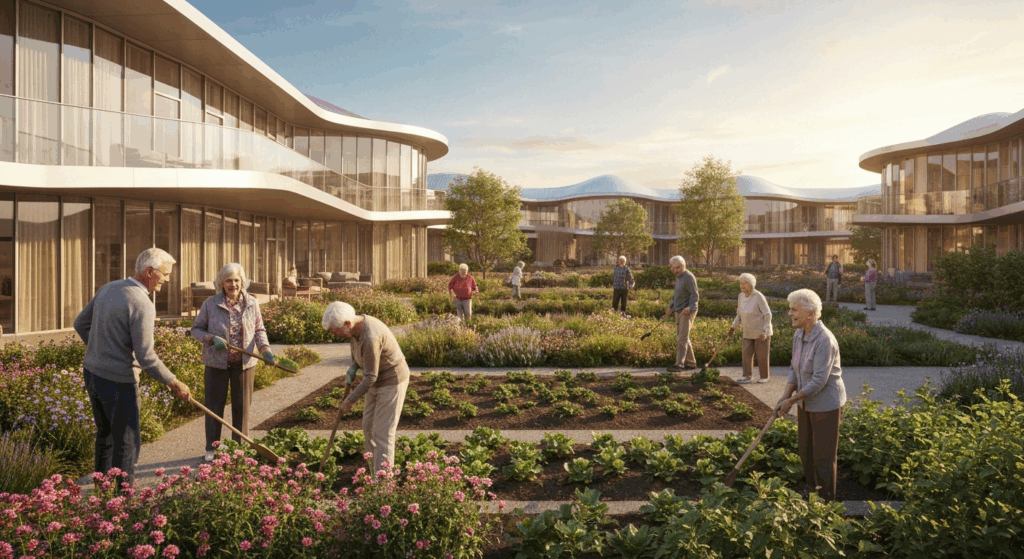
The connection to nature is profoundly beneficial for well-being, and this is a guiding principle in contemporary aged care architecture across Australia. Achieving design excellence means flooding interior spaces with natural light and providing easy access to gardens and green spaces. This not only makes a facility more beautiful but has been shown to improve mood, reduce agitation, and even aid in physical healing.
Leading architecture firms in Brisbane achieve this by designing buildings with large windows, central courtyards, and secure sensory gardens. What services do these firms offer? They typically include site analysis to orient the building for optimal sun exposure and views. The design ensures that even less mobile residents can enjoy a connection to the outdoors from the comfort of their rooms or common areas.
Ways to incorporate nature into aged care design include:
- Internal courtyards and atriums that bring light and greenery into the heart of the building.
- Safe, accessible walking paths through landscaped gardens with sensory plants.
- Large, strategically placed windows that frame views of the surrounding landscape.
7. Adapting Residential-Style Comforts in Aged Care
To combat the institutional feel of older facilities, a leading trend is to infuse aged care with the comforts of home. Architecture firms are drawing on their experience with residential clients and designer homes to create aged care environments that are warm, personal, and inviting. This means moving away from sterile, uniform rooms towards spaces with character and residential-quality finishes.
This approach is evident in the choice of materials, furniture, and lighting. Think soft furnishings, timber accents, and warm, layered lighting instead of harsh fluorescent overheads. Brisbane firms that specialise in luxury homes can bring a high level of detail and sophistication to these projects, ensuring the final environment feels comfortable and dignified, just like a well-designed private residence.
Residential comforts adapted for aged care include:
- Private rooms with distinct layouts and options for personal decoration and furniture.
- The use of high-quality, tactile materials like wood, stone, and textured fabrics.
- Fireplaces and cosy lounge areas that mimic the feel of a family living room.
8. Flexible Spaces for Multi-Purpose Use
Modern aged care facilities need to be adaptable. Architects in Brisbane are designing flexible spaces that can serve multiple functions throughout the day, maximising the practical use of the building’s footprint. This is a smart design strategy that provides variety for residents and functionality for staff, making the facility more dynamic and efficient.
These multi-purpose areas might transform from a morning arts and crafts studio into an afternoon cinema or an evening function room for family events. This adaptability ensures the facility’s workspaces and communal areas can evolve with the changing needs of the community. Top architecture firms known for both residential and commercial projects often excel at creating these highly practical areas of work and leisure.
Examples of flexible spaces include:
- Dining rooms are designed with operable walls to create smaller, private dining areas.
- Activity rooms with movable furniture and integrated storage for different hobbies.
- Lounges that can be sectioned off for family visits or opened up for larger community gatherings.
9. Incorporating Safety and Security Innovations
While creating a comfortable, home-like environment is crucial, safety and security remain paramount in aged care design. Innovative Brisbane architecture firms are integrating advanced safety features in subtle and seamless ways. The goal is to ensure resident safety without creating an environment that feels restrictive or overly clinical, a process that continues from design through to the completion of the commercial property.
This involves a combination of active and passive safety measures. Passive measures are built into the architecture itself, such as non-slip flooring, optimal lighting levels, and layouts that improve visibility for staff. Active measures include modern security systems and emergency alert technologies that are discreetly integrated into the building’s design. Recent design awards for Brisbane firms often recognise this successful balance of safety and aesthetics.
Key safety and security innovations feature:
- Discreet wander management systems that help keep residents with cognitive impairments safe.
- Improved lighting design in corridors and bathrooms to reduce the risk of falls.
- Secure building access controls that are easy for residents and staff to use but prevent unauthorised entry.
10. Collaborative Approaches: Architecture and Interior Design
The most successful aged care projects are born from a deep collaboration between architects and interior designers. Many leading architecture firms in Brisbane now offer integrated design services or have an in-house interior design studio to ensure a cohesive vision from the building’s structure down to the finest detail. This group conversation ensures the exterior form and interior spaces work in perfect harmony.
This partnership is vital in aged care, where the interior environment has a profound impact on residents’ daily lives. While the architect shapes the building’s flow, light, and structure, the interior designer focuses on the tactile and sensory experience. This collaborative approach, offered by firms with comprehensive design services, ensures the final space is not only functional and safe but also emotionally resonant and beautiful.
The table below outlines the distinct yet complementary roles in a collaborative aged care project:
| Role of the Architect | Role of the Interior Designer |
| Designs the overall building structure and layout. | Focuses on the feel and function of interior spaces, including room layouts. |
| Manages spatial flow, natural light, and ventilation. | Selects materials, colours, textures, and finishes to create a specific mood. |
| Ensures structural safety and accessibility compliance. | Chooses furniture, lighting fixtures, and textiles for comfort and aesthetics. |
| Integrates the building with the surrounding landscape. | Designs custom joinery and details that enhance functionality and character. |
Conclusion
The evolution of aged care is increasingly influenced by innovative architectural practices in Brisbane. By prioritising wellness-focused design, sustainable practices, and community-oriented living spaces, architecture firms are setting new standards for what aged care facilities can offer. These designs not only enhance the physical environment but also improve the overall quality of life for residents. From integrating smart technology to ensuring safety and security, the thoughtful transformations taking place create spaces that feel like home, promoting both independence and connection. As we embrace these changes, it’s clear that the future of aged care will be shaped by a commitment to quality design and compassionate care. If you’re interested in exploring how these innovations can benefit your community, don’t hesitate to reach out for more information.
Frequently Asked Questions
Curiosity about aged care facilities can often lead to a flurry of questions regarding design, functionality, and sustainability. Many wonder how architecture firms in Brisbane integrate innovative design elements to enhance the living environments for residents. Additionally, inquiries about the environmental sustainability practices these firms adopt demonstrate an increasing public interest in responsible design. The architectural process involves numerous practical areas of work, ensuring that each space is tailored to meet the unique needs of aged care residents while fostering community engagement.
What services do leading architecture firms in Brisbane offer for aged care?
Leading architecture firms in Brisbane offer comprehensive design services for aged care projects. This typically includes master planning, architectural design, consultant coordination, and integrated interior design. Many also manage the process of securing building approvals to ensure a smooth journey from initial concept to final construction.
How do Brisbane architects incorporate sustainability in aged care projects?
Brisbane architects incorporate sustainability through a holistic design process. They prioritise energy efficiency with passive solar design and natural ventilation, use sustainable and non-toxic materials for healthier indoor environments, and integrate systems like solar power and rainwater harvesting to reduce the facility’s long-term environmental and operational impact.
What should I consider when selecting an architecture firm for an aged care project in Brisbane?
When selecting a firm, look for a portfolio that demonstrates design excellence in creating community-focused and wellness-oriented spaces. Prioritise firms that have a collaborative approach, ideally with experienced interior designers on their team, and a proven track record in delivering complex aged care projects in Brisbane.
 Roger Estes has played a crucial role in the development of Residence Resale Tactics, bringing his analytical skills and attention to detail to the project. As a dedicated helper, Roger has been instrumental in researching emerging market trends and ensuring the platform stays ahead of the curve in providing up-to-date real estate information. His commitment to accuracy and relevance has been essential in creating a resource that real estate professionals and homeowners can rely on for practical guidance.
Roger's contributions go beyond just research; his proactive approach and collaborative spirit have fostered a productive working environment within the team. His efforts have helped shape the platform's strategic direction, allowing Residence Resale Tactics to deliver content that is both insightful and actionable, thereby enhancing its reputation as a trusted authority in the real estate industry.
Roger Estes has played a crucial role in the development of Residence Resale Tactics, bringing his analytical skills and attention to detail to the project. As a dedicated helper, Roger has been instrumental in researching emerging market trends and ensuring the platform stays ahead of the curve in providing up-to-date real estate information. His commitment to accuracy and relevance has been essential in creating a resource that real estate professionals and homeowners can rely on for practical guidance.
Roger's contributions go beyond just research; his proactive approach and collaborative spirit have fostered a productive working environment within the team. His efforts have helped shape the platform's strategic direction, allowing Residence Resale Tactics to deliver content that is both insightful and actionable, thereby enhancing its reputation as a trusted authority in the real estate industry.